


Bible Games: Trivia & Verse
4.8131.00 Reviews
App Specs
- Version
- 1.0.27
- Updated On
- License
- Free
- Downloads
- 10,000+
- Developer
- Floral Game
- Categories
- Word
- Platform
- Android
Screenshots
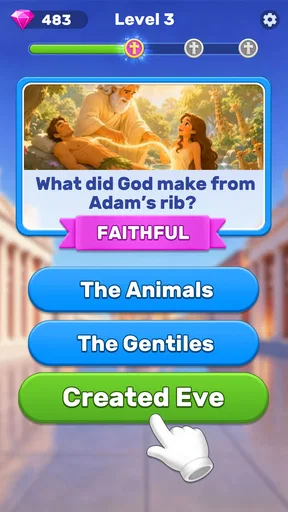
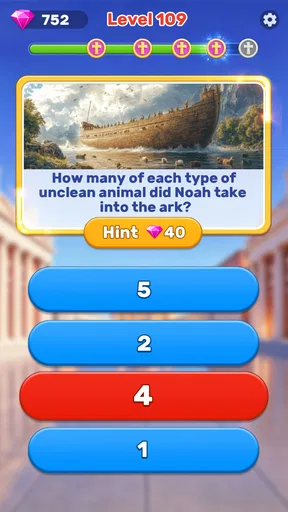
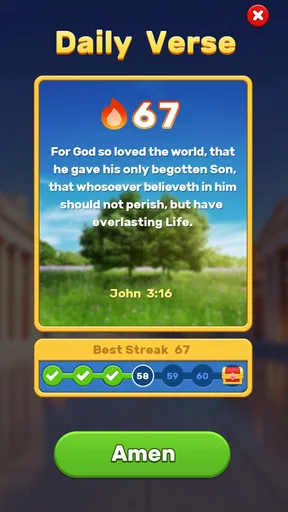
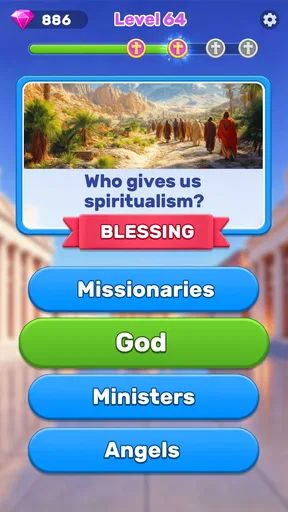

 Analysis by AppCompare
I found Bible Games: Trivia & Verse most appealing when I wanted a short, thoughtful word-game session rather than a long competitive match. It combines Bible-themed quiz play with a daily verse focus, so the experience sits somewhere between a casual trivia game and a small daily reading habit. That combination gives each session a clear purpose: answer questions, test what I remember, and take a moment with a verse before moving on.
It is a free word game from Floral Game, rated for Everyone, and it runs on Android devices using version 8.0 or later. The game has reached over 10 thousand installs and holds a 4.8 average from around 2.4 thousand ratings, which suggests that its simple format is connecting with a focused audience. I would not treat those figures as a guarantee that every player will enjoy it, but they do match my impression that this is designed to be approachable rather than intimidating.
How the first sessions establish a reason to return
The early appeal is easy to understand. I do not need to learn a complicated control scheme or spend time building a character before playing. The central loop is based on Bible questions and verse-oriented content, which makes the first few minutes feel purposeful. For someone who already reads the Bible, the questions can work as a memory check. For someone exploring Christian material, they offer a more active alternative to simply scrolling through text.
That early goal matters because quiz games can otherwise feel disposable. A random question followed by another random question does not always create momentum. Here, the daily verse idea gives the session a natural stopping point and a reason to open the game again later. I found that useful on busy days: instead of promising myself a long play session, I could treat it as a brief mental break with a spiritual element.
The format is also suitable for shared use. A parent could answer questions with a child, friends could compare their knowledge casually, or someone could use it alone as a quiet morning activity. The Everyone rating makes that broad audience clear, although adults seeking advanced theological study should keep their expectations realistic. This is a game first, not a replacement for a study Bible, commentary, or structured course.
What makes the opening feel accessible
The strongest design choice is the low barrier to entry. The subject matter may be familiar to some players, but the game does not require them to approach it like an academic exam. That distinction helps the experience feel welcoming. I can imagine opening it while waiting for an appointment, during a coffee break, or at the end of the day when I want something more reflective than a typical word puzzle.
There is a useful trade-off here. A focused theme gives the game more identity than a general trivia app, but it also narrows its audience. If Bible-related questions are not personally meaningful to you, the quiz loop may lose its appeal quickly. Likewise, players who prefer broad general knowledge, word construction, or fast arcade action will probably find better matches elsewhere.
Worth Reading Before You Choose

Flipboard Shows What News Apps Must Do Beyond the Feed

Switching to Android Auto Means Rethinking Your Driving Routine

Google Calendar Makes a Crowded Week Easier to Manage

Ludo King Makes the Most of the Minutes Between Plans

Baby Panda World Brings Quick Play to Modern Phones, but Its Game Library Feels Busy

ESPN’s Live Game View Makes Following Close Games Easier
The free entry point is another practical advantage. I could approach the game without committing money first, then decide whether it deserved a regular place on my phone. Optional purchases range from $1.99 to $99.99 per item, so I would advise checking the purchase screen carefully before confirming anything, especially on a shared device. The free starting point is friendly, but the presence of a wide purchase range means families should use the platform’s purchase controls if children may access the game.
Progress signals, challenge, and the rhythm of play
What kept me interested was not the idea of endlessly collecting points. It was the small sense of completion that comes from finishing a quiz moment and reaching the verse portion of the experience. The daily structure creates a simple rhythm: open the game, engage with the question-based content, read the verse, and leave with a clear sense that the session is complete.
That pacing is better suited to regular short visits than marathon play. I would not install this expecting a deep campaign with a large world to explore. Its strength is concentration. The game gives me a compact task, and the spiritual theme makes that task feel different from solving another anonymous word grid.
One practical tip is to avoid rushing through the verse simply to finish the quiz. The two parts serve different purposes. The trivia encourages recall and attention, while the verse gives the session a quieter ending. Treating them as separate moments makes the app feel more balanced. If I only chase correct answers, I lose the feature that most clearly separates this game from ordinary quiz alternatives.
How the difficulty feels in everyday use
The challenge depends heavily on how familiar I am with the material. A player who regularly reads the Bible may find some questions comfortable, while a newer reader may need more time to recognize names, events, or passages. That creates a personal difficulty curve rather than one that feels identical for everyone.
I see that as both a strength and a limitation. Familiarity can make the game relaxing and confidence-building, but it can also reduce tension for experienced readers. On the other hand, beginners may feel that a missed answer reflects a knowledge gap rather than a failure of game skill. The best way to use it is as a learning prompt: when I miss something, I can treat the question as a reason to revisit the subject instead of simply moving on.
For a more satisfying session, I would play without immediately searching for every answer. Guess first, notice which topics cause hesitation, and then use the result to guide later reading. That turns the quiz into a lightweight self-check. It is a more useful workflow than treating the app as a score-only contest, particularly for players who want their game time to support personal study.
Compared with a general trivia app, the narrower subject gives the questions a stronger sense of continuity. Compared with a traditional Bible reading app, the quiz format demands more active recall. Compared with a standard word game, it offers less emphasis on spelling patterns or vocabulary manipulation and more emphasis on knowledge of biblical content. Choosing between them depends on what I want from the moment: broad entertainment, quiet reading, or themed recall.
Where the pacing may lose momentum
The same daily structure that encourages return visits can feel restrictive to players who want a large amount of content at once. If I am in the mood for a long session, a compact daily experience may not provide enough variety or urgency. This is not necessarily a flaw; it is a sign that the game is built around habit more than binge play.
There is also a risk that the routine becomes mechanical. Opening an app every day is not the same as remaining genuinely interested in it. The verse component helps prevent the experience from being only a question treadmill, but players who need frequent new mechanics, dramatic rewards, or a strong competitive ladder may find the pacing too gentle.
I also would not recommend it as the only app for someone studying theology seriously. Quiz questions can reinforce recall, but they rarely provide the context needed to understand interpretation, historical background, or differences between translations. For that purpose, a dedicated study resource is the better companion. This game works best as an accessible supplement, not as a complete learning system.
Retention pressure and the value of a calm daily habit
The most convincing reason to return is the daily verse. It creates a soft form of retention rather than relying entirely on pressure. I do not feel that I need to spend a large block of time to keep up. A short visit can still feel complete, which is important for people who want a consistent habit but have unpredictable schedules.
That calm approach will appeal to some players more than aggressive reward loops. I prefer it when I want the app to support reflection instead of demanding constant attention. At the same time, players who are motivated by visible unlocks, escalating competition, or a large collection of rewards may find less to chase here. The game’s attraction comes from the subject and routine, not from the kind of progression found in a large role-playing game.
A useful everyday scenario is a family discussion after dinner. One person can read the verse, another can attempt the quiz, and the group can talk about why an answer was familiar or surprising. The game does not need to dominate the evening to be useful. In fact, it works better when it starts a conversation rather than replacing one.
Another good use is a personal reset between tasks. I can play a short round, notice which answers I remembered confidently, and then leave the phone alone. That makes the app less likely to become an endless distraction than games built around continuous levels. Still, anyone who is sensitive to in-app purchase prompts should remain attentive, because free access and optional purchases can create different experiences depending on how the game presents them.
Who will get the most from it
I would recommend it to Christian players who enjoy quizzes, families looking for age-appropriate themed entertainment, and readers who want a small daily reminder connected to Bible content. It is especially suitable for people who appreciate a clear beginning and end to each visit. The game can also help someone identify areas where their knowledge is stronger or weaker without turning the experience into formal testing.
I would be more cautious about recommending it to players who want a general-purpose word game. The store category may place it alongside other word titles, but its identity comes from the Bible theme, not from open-ended vocabulary play. Someone searching for anagrams, crosswords, spelling challenges, or broad trivia should compare it with those specialized alternatives before downloading.
It is also not the right choice for anyone expecting a substitute for worship, guided study, or a full reading plan. The daily verse can encourage a habit, but the app’s game structure naturally simplifies the experience. That simplicity is exactly why it is approachable, and also why it cannot cover every need.
Practical details before installing
The game is free to download, with optional in-app purchases listed from $1.99 to $99.99 per item. I would begin with the free experience and decide based on actual use rather than assuming a purchase is necessary. On a phone shared with children, I would enable the device’s purchase restrictions before handing it over.
Compatibility is straightforward for Android users: the game requires Android 8.0 or newer. The current version is 1.0.27, and the developer is Floral Game. The Everyone content rating makes it broadly accessible, but parents should still decide whether the quiz and verse format fits their child’s interests and level of independence.
The game was released on May 15, 2026, so I would keep an eye on future updates if I planned to make it part of a long-term routine. A daily-content concept benefits from freshness, but the quality of that ongoing experience depends on how well the developer maintains and expands it over time. I would judge it first on whether the current loop feels worthwhile, not on promises about what may come later.
My verdict on the progression experience
After spending time with it, I see Bible Games: Trivia & Verse as a focused daily quiz with a reflective finish. Its early goals are clear, its progress signals are easy to understand, and its pacing suits short repeat visits. The difficulty is naturally personal: experienced Bible readers may want more challenge, while newer readers can use missed answers as prompts for further learning.
The game does not need elaborate systems to justify its place on a phone. Its strongest idea is the connection between active recall and a daily verse. That pairing gives the experience more meaning than a generic quiz, while keeping the controls and commitment simple. The best way to enjoy it is as a small daily practice, not as an endless progression game.
My main reservation is that the gentle structure may not satisfy players who need constant novelty, deep unlock paths, or intense competition. The optional purchase range also deserves attention from families and anyone who prefers completely uncomplicated free play. For serious Bible study, I would use a dedicated reference tool alongside it.
For the right audience, though, I think it is an easy recommendation. Floral Game has created a free, accessible word-game experience that gives Bible trivia a clear daily context. If you want a short quiz with a verse-based pause at the end, and you are comfortable with a calm routine rather than a sprawling game system, this is worth trying. It works best when the goal is to remember a little, reflect briefly, and return tomorrow without feeling pressured.
Pros
- Covers Bible trivia across both Old and New Testament topics.
- Short rounds make it easy to play during quick breaks.
- Can help reinforce recall of names
- events
- and scripture details.
- Suitable for casual players who enjoy quiz-style challenges.
- May encourage users to explore Bible passages beyond the questions.
Cons
- Some questions may depend on a specific Bible translation.
- Difficulty and question variety can feel uneven between rounds.
- Repeated questions may reduce long-term replay value.
- Requires careful reading
- as similar biblical names can cause confusion.
- Religious content makes it unsuitable for users seeking a general trivia game.
FAQs for Bible Games: Trivia & Verse
What is Bible Games: Trivia & Verse?
Bible Games: Trivia & Verse is a faith-based mobile app that combines Bible trivia with verse-focused activities. It is designed to help users test their knowledge of Scripture while discovering or reviewing important biblical passages. The app is suitable for casual play, personal study, family activities, and anyone looking for a more interactive way to engage with Bible content.
How does the Bible trivia gameplay work?
The trivia experience generally presents questions about biblical people, events, books, teachings, and well-known verses. Players select an answer from the available options and receive immediate feedback, making it easy to learn from mistakes. Difficulty can vary, so the app may appeal to both beginners who are becoming familiar with the Bible and experienced readers who want to challenge their knowledge.
Can Bible Games: Trivia & Verse be used for Bible study?
Yes, the app can be useful as a supplementary Bible-study tool, especially for reviewing facts, memorizing verses, or starting conversations about Scripture. However, it should not be treated as a replacement for reading the Bible itself or consulting a trusted study Bible, church leader, or commentary. Users should also check wording and references against their preferred Bible translation when accuracy is important.
Is Bible Games: Trivia & Verse suitable for children and families?
The quiz-based format can make Bible learning more approachable for children, teenagers, and families, particularly during group activities or devotional time. Parents should still review the app’s content, language, advertisements, and privacy settings before allowing younger children to use it independently. The exact suitability may depend on the child’s reading level, the difficulty of the questions, and the app’s current content.
Does Bible Games: Trivia & Verse require an internet connection or include in-app purchases?
Internet requirements and purchase options can depend on the version installed and the developer’s current settings. Some features may work offline after installation, while advertisements, updates, rankings, or additional content may require a connection. Before downloading, check the Google Play Store or App Store listing for current information about ads, subscriptions, in-app purchases, supported devices, and the permissions requested by the application.


